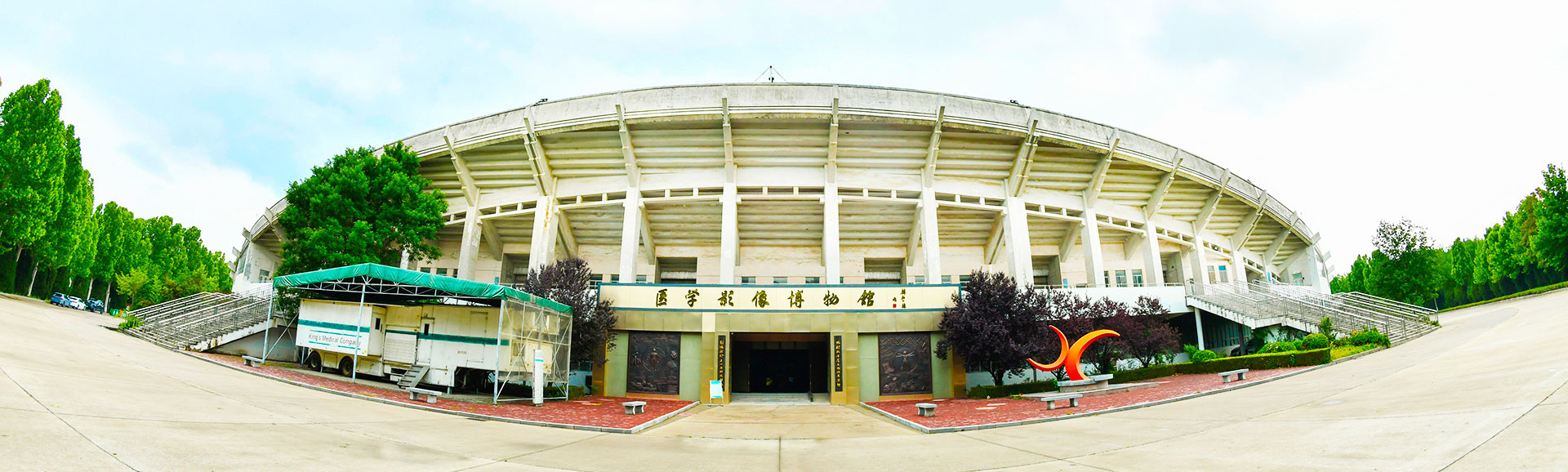
医学影像博物馆

医学影像博物馆(Medical Imaging Museum)

博物馆是一个传播优秀民族文化的重要窗口,是社会经济发展到一定程度的产物,它表达了人们对精神生活的追求和向往,同时也促进了文化教育的发展和公众素养的提高,启发人们的创新意识。我国有博物馆2000余所,在类型分布上,综合类和历史文化类的博物馆约占70%,其它具有行业特点的专业性博物馆为数不多,科学技术类和专业经济门类的博物馆更少。我国高等院校设立的各类博物馆或近似于博物馆的设施有100余座。大学建立博物馆能够极其有效地促进学生综合素质的培养,一个内容丰富、藏品精绝的展览,可以给参观者以强烈的视觉冲击,从而留下不可磨灭的印象。有时候,眼见为实的学习,可以达到胜似读书的效果。所以有人说:“大学应该像重视运动场和图书馆一样,重视校内的博物馆。”另外,大学的博物馆也会对所在城市的文明建设以及市民文化水平的提高,起到不可忽视的作用,它又从某个侧面反映出一个国家对待传统文化的重视程度,是体现这个国家科技文化水平发展的重要标志之一。哈佛大学师生对哈佛大学的博物馆有这样一段话:“如果物竞天择、天人合一的传统教育,使哈佛人扎根于深厚的人文与自然交融的土壤之中,那么可以说,哈佛博物馆文化的熏陶,就如同输送给哈佛人赖以生存和竞争的养分,它使每个哈佛人受用终生。”博物馆实际上就是一部微缩的近、现代文明与科技的进步史。

建立反映专业科技的博物馆,世界各国已有先例,如英国的机车博物馆,日本的广播电视技术博物馆,我国的航空航天技术博物馆等等。作为19世纪末20世纪初重大发明之一的X线及其产生装置、应用设备和技术,是电子技术、计算机技术、图像处理技术和X线技术相结合的产物,是医学影像学里程碑式的创新。因此,建立医学影像博物馆,回顾X线发现100多年来现代医学影像设备的发展历史,展示这一历史时期国际国内在该领域取得的巨大成就,意义非常重大。

泰山医学院1983年被国家卫生部确定为全国放射技师培训基地。1985年率先在国内高等学校设置放射技术专业(大专),1994年开始招收医学影像学专业本科生,并先后开设生物医学工程、医学物理本科专业,继而发展成为医学影像专业硕士生培养点,与多家国内外高等院校、大型专业企业建立了合作关系,为我国培养了大批医学影像专业及生物医学工程专业高级专门人才。

鉴于泰山医学院医学影像专业和生物医学工程专业的办学特色和教学实践,放射学院在学校领导关怀支持下,提出了创办医学影像博物馆的设想。筹建博物馆的消息传出后,得到了国内许多专家学者以及社会各界的大力支持和来信祝贺,中国工程院院士、著名医学影像学专家、泰山医学院名誉院长刘玉清先生来信指出:“这是一项艰巨而需要专业技术和相当经费的任务,这不仅可以从一个侧面反映医学成像技术的发展历程,而且对推动泰山医学院以至我国的医学影像学、技术学和医学工程专业的发展将会起到积极的作用。同时对科学普及提高全国人民的科技素质也有重要意义。”

经过几年的努力,征集了大批医学影像学设备、具有收藏展示意义的关键部件和专业著作,邀请全国人大副委员长韩启德先生为医学影像博物馆题写馆名,初步具备了建馆条件,学校研究确立了博物馆场所,于2005年10月20日放射学院成立20周年之际,医学影像博物馆宣告落成并对外开放。

医学影像博物馆由泰山医学院与中国医学装备协会共同建设,建筑面积2000平米,目前展品有国产第一代核磁共振成像装置,第一代头颅CT扫描成像装置,第二代全身CT扫描装置,各种类型、不同时代X线摄影设备、X线透视设备以及C形臂X线成像装置,早期B型超声成像仪等。另外还陈列有各种类型各个发展时代X线球管、各类医学成像装置中具有代表意义的关键部件,各类早期期刊、专业图书、专家论著等。

博物馆目前大体分为八个区域,分别为:医学影像技术领域国内外专家介绍区、传统医学影像成像设备展区、CT、MRI展区、超声设备展区、成像设备部件展区、著作文献展区、国内医学影像设备企业产品展区以及专业科技展览图版等。今后,我们将在社会各界关怀支持下,努力奋斗,不断创新,逐步建成高层次、数字化博物馆,突出文化气息,彰显教育魅力,与国内、国际博物馆接轨,为繁荣我国科学文化事业多做贡献。

A museum serves as an important window for promoting outstanding cultural heritage. It is a product of societal and economic advancement, reflecting humanity’s pursuit of spiritual enrichment, while also fostering educational development and enhancing public literacy. With over 2,000 museums in China, approximately 70% are general or historical and cultural museums. In contrast, specialized museums—especially those dedicated to science, technology, and specific industries—are relatively rare. Universities across China have established more than 100 museums or museum-like facilities, which play a vital role in cultivating students’ comprehensive qualities. A well-curated exhibition with rich content and remarkable artifacts can create a lasting impression through strong visual impact. In many cases, experiential learning in museums can rival or surpass traditional classroom education. As some have noted, “A university should value its museum as much as its sports fields and libraries.”

University museums also contribute meaningfully to the cultural development of their host cities, helping to elevate public cultural awareness. Furthermore, they reflect a nation’s commitment to preserving its traditional culture and serve as important indicators of scientific and cultural progress. As Harvard University students and faculty have said: “If traditional education rooted in natural and humanistic integration provides the soil for Harvard people to grow, then the museum culture at Harvard delivers the nutrients essential for survival and success, benefiting them for life.” In essence, a museum is a condensed chronicle of modern civilization and scientific advancement.

Specialized museums dedicated to technological fields have already been established in many countries—such as the Railway Museum in the UK, the Broadcasting Technology Museum in Japan, and the Aerospace Technology Museum in China. Among such groundbreaking innovations of the late 19th and early 20th centuries, the discovery of X-rays and their corresponding imaging devices and technologies represent a monumental milestone in medical imaging. These advancements—arising from the integration of electronics, computer science, image processing, and X-ray technology—underscore the significance of establishing a medical imaging museum. Such an institution would offer a comprehensive retrospective on over a century of X-ray development and showcase the major achievements in this field, both domestically and internationally.

In 1983, Taishan Medical University (formerly Taishan Medical College) was designated by China’s Ministry of Health as a national training base for radiologic technologists. In 1985, it became the first higher education institution in China to offer a formal program in radiologic technology. By 1994, the university had launched an undergraduate program in medical imaging, followed by programs in biomedical engineering and medical physics, eventually becoming a master’s degree-granting institution in the field of medical imaging. It has built strong partnerships with leading domestic and international institutions and companies, and has cultivated a large number of high-level professionals in medical imaging and biomedical engineering.

In recognition of the university's strengths in medical imaging and biomedical engineering, and with the support of university leadership, the School of Radiology initiated the idea of establishing a Medical Imaging Museum. The proposal quickly received strong backing and congratulatory messages from experts, scholars, and individuals from all walks of life. Academician Liu Yuqing of the Chinese Academy of Engineering, a renowned expert in medical imaging and Honorary President of Taishan Medical University, remarked in his letter: "This is a challenging endeavor requiring professional expertise and considerable funding. Not only will it reflect the historical development of medical imaging technologies, but it will also greatly contribute to the advancement of the medical imaging and biomedical engineering fields at Taishan Medical University and across China. Additionally, it will play an important role in public science education and in enhancing the scientific literacy of the nation.”

After several years of effort, the museum has amassed a substantial collection of medical imaging equipment, key components of historical value, and a wide array of professional publications. Mr. Han Qide, Vice Chairman of the Standing Committee of the National People’s Congress, inscribed the name of the museum. The university finalized the site for the museum, and on October 20, 2005—marking the 20th anniversary of the School of Radiology—the Medical Imaging Museum was officially inaugurated and opened to the public.

The Medical Imaging Museum was jointly established by Taishan Medical University and the China Association of Medical Equipment. The museum spans an area of 2,000 square meters and features key exhibits, including China’s first-generation MRI system, first-generation cranial CT scanner, second-generation whole-body CT scanner, as well as a range of X-ray radiography, fluoroscopy, and C-arm systems. Early B-mode ultrasound scanners are also on display. In addition, the museum houses representative components from various imaging systems across different eras, diverse types of X-ray tubes, early periodicals, specialized books, and notable academic works by leading experts.

The museum is currently divided into eight major sections:

  1. International and domestic experts in medical imaging technology

  2. Traditional medical imaging equipment

  3. CT and MRI equipment

  4. Ultrasound equipment

  5. Imaging system components

  6. Academic publications and literature

  7. Chinese medical imaging enterprise products

  8. Professional scientific exhibition panels

Looking ahead, with the continued support of society and the academic community, we will strive for innovation and excellence, aiming to develop a high-level, digitalized museum with strong cultural and educational appeal. Our goal is to align with leading national and international museums and contribute meaningfully to the advancement of science and culture in China.